Probiotics and antibiotics: what actually helps?
Antibiotics treat bacterial infections, but they can also disrupt the gut microbiome. Some probiotics may lower the chance of antibiotic-associated diarrhea. Learn which strains have been studied, when to take them, when to avoid them, and when diarrhea needs medical attention.
What happens to the gut when you take antibiotics?
Antibiotics fight bacteria responsible for an infection. Depending on the antibiotic and the person, the medicine can also temporarily change gut bacteria that were not causing the infection. These changes may cause loose stools, gas or discomfort, although not everyone develops symptoms.
Microbial balance shifts
Some gut bacteria become less abundant while others may increase. The extent and duration vary with the medicine, treatment length, and individual microbiome.
Diarrhea can occur
Antibiotic-associated diarrhea (AAD) is a common side effect, but it has multiple possible causes. Not every episode is an infection.
Recovery is individual
The microbiome often changes again after treatment. A varied diet, adequate fluids, and time are useful foundations; no supplement guarantees a full microbiome “reset.”
Do probiotics help prevent antibiotic-associated diarrhea?
For some people and some formulations, possibly yes. Trials and evidence reviews suggest a modest-to-meaningful reduction in AAD in certain settings. That result should not be extrapolated to every probiotic bottle: the organism, strain or combination, dose, timing and patient population all matter.
A 2025 Cochrane review found lower rates of antibiotic-associated diarrhea in pooled trials, but graded much of the evidence as low certainty. The NIH Office of Dietary Supplements notes that benefits may be more likely when an appropriate probiotic is started early in the antibiotic course. This is a potential preventive benefit—not treatment for diarrhea that is already severe. [1, 2]
| Organism/formulation | What the evidence means | What to check on a label |
|---|---|---|
| Saccharomyces boulardii Probiotic yeast | Studied in some AAD prevention trials. Clinical results cannot automatically be applied to every yeast product. | Manufacturer, strain identification where available, viable count, directions and warnings. |
| Lacticaseibacillus rhamnosus GG (LGG) Formerly Lactobacillus rhamnosus GG | Among strains studied for AAD, particularly in children. Evidence does not mean everyone taking antibiotics needs it. | “GG” on the label; not merely the species name or a large CFU number. |
| Multi-strain blends Various species | Some exact combinations have trial evidence; others have not been directly tested for AAD. | Fully named strains and quantities; avoid assuming more strains or CFUs are always better. |
AAD is not the same as C. difficile
Clostridioides difficile can cause dangerous infection after antibiotic use. A 2025 Cochrane analysis suggested a small possible preventive benefit with low-certainty evidence, while a 2026 AGA clinical practice update advises against probiotics to prevent initial or recurrent C. difficile infection. They are not a substitute for diagnosis or medical treatment. [3, 4]
When should you take a probiotic with antibiotics?
There is no universal schedule for every antibiotic or probiotic. In research on prevention, probiotics have often been started early in the antibiotic course. If your clinician approves a bacterial probiotic, follow the product’s label and ask the pharmacist whether to separate it from the antibiotic; taking them at different times may help avoid exposing bacterial cultures to the medicine. S. boulardii is a yeast, so its interaction with antibacterial medicines is different, but antifungal medicines may affect it.
During the prescription
- Take the antibiotic exactly as prescribed.
- Ask about probiotics before starting if you are high-risk or take other medicines.
- Check the exact probiotic strain and labeled serving rather than choosing the highest CFU.
- Keep hydrated if you develop mild loose stools.
After the prescription
- Do not assume you must continue supplements indefinitely.
- Return gradually to a varied, fiber-containing diet as tolerated.
- Yogurt with live cultures and fermented foods may fit your diet, but are not equivalent to studied products.
- Persistent or worsening symptoms deserve clinical review.
Two strain-focused products to compare
These are commercial examples of a probiotic yeast and an LGG-labeled bacterial product—not a ranking, treatment recommendation or promise of AAD prevention. An organism named in research does not establish that every product containing it was used in the trials.
Affiliate disclosure: We may earn a commission if you buy through the Herbs Direct links below, at no additional cost to you. We distinguish merchant label details from independent clinical evidence.
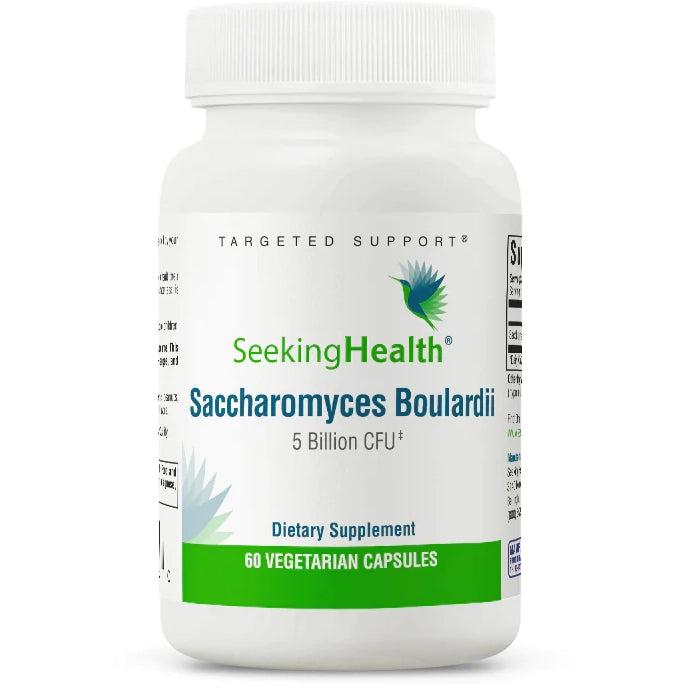
Seeking Health Saccharomyces boulardii
60 vegetarian capsules • Product name verified at Herbs Direct
Why it’s relevant: S. boulardii is an organism studied in antibiotic-associated diarrhea research. The merchant listing does not establish equivalence to each particular clinical-trial strain.
Important caution: Avoid without medical approval if immunocompromised, severely ill, hospitalized with a central line, pregnant or nursing; check product-specific contraindications.
View at Herbs Direct ↗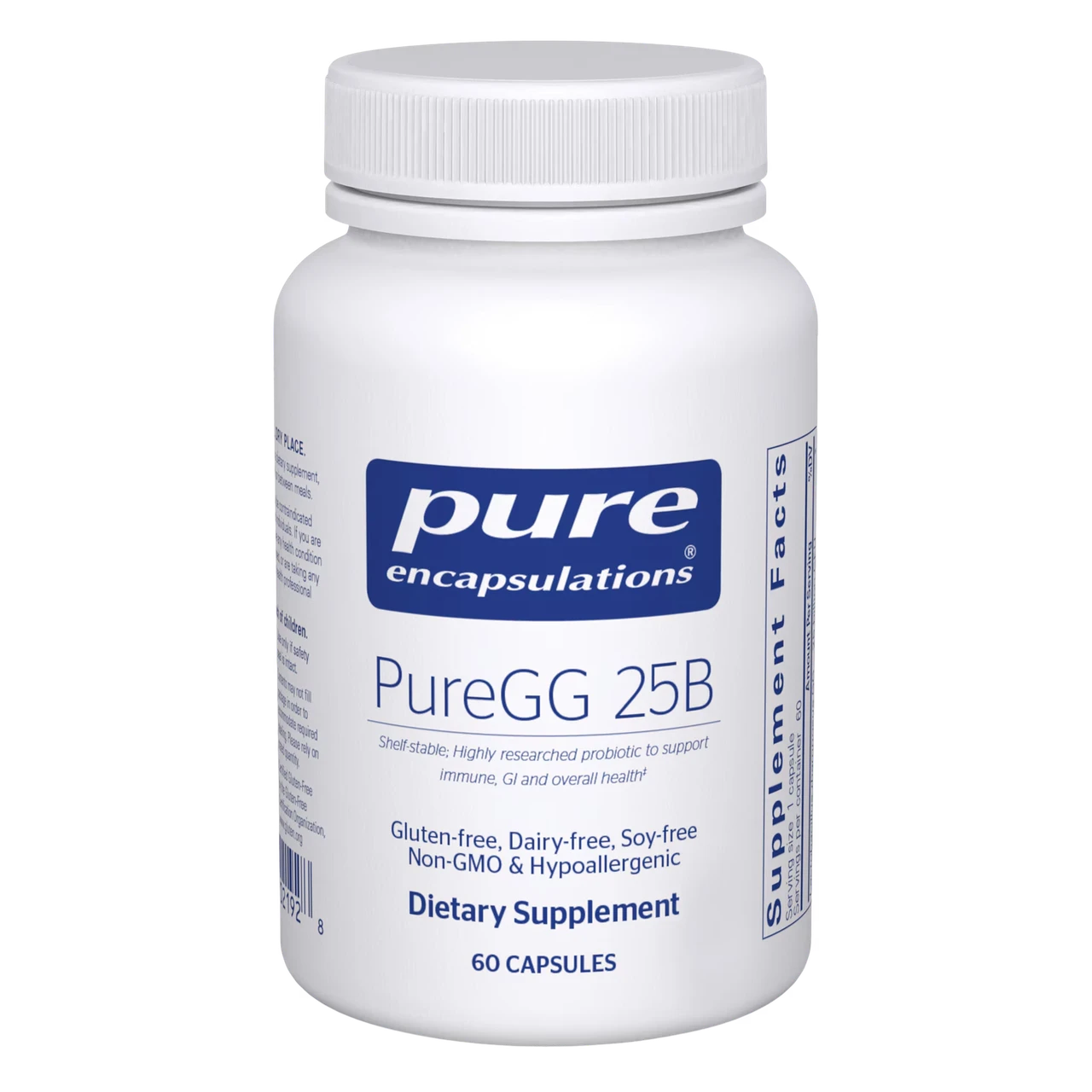
Pure Encapsulations PureGG 25B
25 billion CFU LGG per capsule • 60 capsules • Herbs Direct listing
Why it’s relevant: The label explicitly identifies L. rhamnosus GG, a well-studied strain. The 25-billion-CFU label amount is a product characteristic, not proof that higher CFUs lead to better outcomes.
Important caution: Review the label with a clinician if you have serious illness, immune suppression, are pregnant or nursing, or are buying for a child.
View at Herbs Direct ↗Retail stock, images and formulations can change. Confirm the current ingredient and strain information on the package before purchasing. Only the two tracked purchase buttons above lead to merchants.
When not to self-treat—and when to call a clinician
A probiotic is not right for everyone. People with a weakened immune system, serious underlying illness, central venous catheters, or a history of unusual infections may face a greater risk from live microorganisms. The same caution applies in hospital settings. People who are pregnant or nursing and caregivers choosing products for children should get individualized advice. [5]
Call a healthcare professional promptly if
- Diarrhea occurs during or after an antibiotic, especially with three or more watery stools in a day.
- Symptoms persist or worsen, or you develop fever, blood in stool, or significant abdominal pain.
- You recently had C. difficile or are at increased risk of complications.
Seek urgent medical evaluation if
- You have severe abdominal pain, a swollen abdomen, or signs of significant dehydration.
- You cannot retain fluids, feel faint or confused, or are making very little urine.
- You have rapidly worsening illness or bloody diarrhea with systemic symptoms.
Do not ignore diarrhea after antibiotics
The CDC advises contacting a healthcare professional if diarrhea develops while taking or after taking antibiotics. Serious C. difficile infection requires testing and medical treatment—not a supplement or an at-home microbiome cleanse. [6]
Probiotics and antibiotics: FAQ
Should everyone take probiotics with antibiotics?
No. Some strains may help some people avoid antibiotic-associated diarrhea, but the overall benefit depends on a person’s risk and the specific product. For many healthy people the additional benefit may be small, and some people should avoid live microbial supplements.
Can probiotics stop an antibiotic from working?
Probiotics do not replace the antibiotic and generally should not cause you to change its course. Antibiotics can affect susceptible bacterial probiotics, so ask a pharmacist about the appropriate schedule and other potential interactions for your specific medications.
Is S. boulardii the same as bacterial probiotics?
No. S. boulardii is a yeast, not a bacterium. This affects how it interacts with antibacterial and antifungal medications. It can also pose particular risks in severely ill or immunocompromised patients.
How many hours should I separate probiotics and antibiotics?
There is no one-size-fits-all number. Some instructions suggest separating bacterial probiotics by a few hours; your prescribed medicine and product label should guide the timing.
Can yogurt replace a probiotic supplement?
Yogurt containing live cultures may contribute to a balanced diet, but the organisms and doses are not necessarily identical to those studied in antibiotic-associated diarrhea trials. Choose yogurt based on your dietary needs and tolerance.
Can a probiotic treat C. difficile infection?
No. A suspected or confirmed C. difficile infection needs clinical assessment and appropriate treatment. Current 2026 AGA clinical practice advice recommends against probiotics for preventing initial or recurrent C. difficile, despite ongoing research and differing interpretations of older studies.
How long does the microbiome take to recover?
There is no fixed timeline. The degree of disruption and recovery vary with antibiotic type, exposure, existing diet, and individual microbiome. Avoid products promising an exact “gut reset” deadline.
References and further reading
- NIH Office of Dietary Supplements. Probiotics: Fact Sheet for Consumers. Antibiotic-associated diarrhea and strain-specific evidence.
- Cochrane Database of Systematic Reviews (2025). Probiotics for preventing C. difficile-associated diarrhea. Systematic review.
- American Gastroenterological Association (2020). Role of probiotics in gastrointestinal disorders. Earlier conditional guideline recommendations.
- American Gastroenterological Association (2026). Clinical practice update on management of C. difficile infection. Updated advice on probiotic prevention.
- NIH Office of Dietary Supplements. Probiotics: Fact Sheet for Health Professionals. Safety and serious illness considerations.
- Centers for Disease Control and Prevention (2026). About C. diff. Symptoms and medical evaluation.
Continue learning about your gut microbiome
Compare supplement labels, review the basics, or see the separate article focused on longer-term antibiotic recovery. Educational content is not personal medical advice.
Probiotic buying guide · Compare formulations · Antibiotic recovery guide · Medical disclaimer